Get Free Ebook Whales (Wildlife Series)
Guide consists of whatever new and eye-catching to check out. The option of topic as well as title is actually various with various other. You can feel this publication as one of the fascinating book because it has some benefits as well as possibilities for transforming the life better. And currently, this book is available. The book is positioned with the lesson and also info that you require. But, as basic book, it will certainly not require much thought to read.
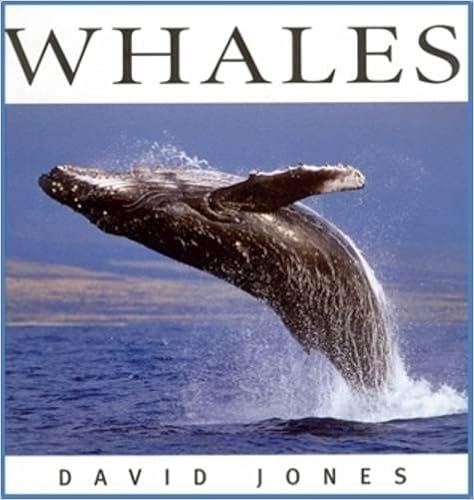
Whales (Wildlife Series)

Get Free Ebook Whales (Wildlife Series)
Waiting to a boosted ideas and minds are a must. It is not only done by the people that have large jobs. That's additionally not only performed by the students or earners in fixing their tasks troubles. Everybody has exact same opportunity to seek and also look forward for their life. Enriching the minds and thoughts for better lifestyle is a must. When you have decided the means of just how you obtain the troubles as well as take the solving, you need to need reflections as well as motivations.
In wondering the important things that you need to do, reviewing can be a brand-new choice of you in making brand-new points. It's constantly claimed that reading will certainly constantly aid you to conquer something to much better. Yeah, Whales (Wildlife Series) is one that we always provide. Also we share time and again regarding the books, what's your perception? If you are one of the people enjoy reviewing as a manner, you can find Whales (Wildlife Series) as your reading material.
You may not feel that this book will be as crucial as you think today, but are you sure? Learn more about Whales (Wildlife Series) as well as you can truly find the advantages of reading this book. The given soft file book of this title will provide the impressive situation. Also reading is just hobby; you could begin to be success b this book. Believe more in judging the books. You could not judge that it is necessary or not currently. Read this publication in soft documents as well as get the methods of you to save it.
Yes you're right; this book that is provided in this site remains in the soft data. But, it doesn't imply that it will certainly minimize the material of the book. It specifically adds the benefits. You can replicate the soft apply for your own tool as well as read it every single time you want. Whales (Wildlife Series) is constantly being among the recommended publications to review, by many people in the world.
About the Author
David Jones graduated with a biology degree and works for a government agency that deals with fisheries and oceans.
Read more
Excerpt. © Reprinted by permission. All rights reserved.
Introduction The Surface Broken The whale rolls on the boundary of air and sea, sovereign in one world but forever bound to the other. The ancients knew that whales are not fish, and they knew it by their breathing. As the whale swims, it stitches a seam of air and water with thread drawn, in part, from our own breath. As much as their great size, it is our shared mammalian ancestry that attracts us to the whale. Perhaps all mammals are called to the sea; certainly, humans feel its pull. The difference between us and the whales is that 50 million years ago, their terrestrial ancestors answered that call. Spending more and more of their time in the water over generations, they evolved the fusiform bodies that allow them to slip through water as easily as we move through air. Long before terrestrial evolution shaped the hands and the minds of human beings, the sea streamlined the limbs of the cetacean progenitors. Perhaps what we feel for whales and dolphins is as much envy as it is kinship. While the evolution of the hand equipped us ably for a life of technology -- a life of work -- the whales were relieved of manual tasks. They are like the cousin who quit her office job and went traveling. With the exception of some birds1 whales and dolphins are the freest of animals. The gray whale travels the longest migration of any mammal -- 12000 kilometres (7500 miles) from the Bering Sea to the Baja peninsula. There is evidence that baleen whales can communicate with their own kind half an ocean away through low-frequency calls. When a blue whale dives, before its tail has left the surface its head is already deeper than most scuba divers will go. The world must seem a small place to beings 30 metres (100 feet) long. It's natural enough to associate such freedom with a life of leisure. Whenever we see whales and dolphins, they seem to be playing. Whales appear to breach for the sheer joy of it and dolphins leap and roll before the bows of ships, sometimes for hours, before moving off to some random destination. As if that weren't enough to convince us of their ideal existence, many of the porpoises seem to be smiling privately about something we can only guess at. Their whole appearance suggests that they're having the time of their supremely adapted lives while we've been left waving from the dock. But cetacean life is far from carefree. Toothed whales hunt in some of the coldest and darkest water on earth -- the polar and abyssal oceans. For baleen whales, the summer is a constant search for food. The remainder of the year is spent swimming half a world away to their breeding grounds, or sustaining their young. For dolphins, the open ocean is a truly restless place. Even in sleep, half the dolphin brain remains awake to keep its breathing hole above water. Our view of whales has not always been as romantic as it is today. For millennia, people saw only their beached and decomposed corpses or their backs rolling by in the distance. Finding dread preferable to nescience, we imagined the worst. Medieval engravers often depicted whales with rhinoceros horns, walrus tusks, and even smoking chimney pots for blowholes. The eyes and teeth were greatly enlarged, and the baleen drawn as a beard or eyebrows. In general, they were made as fearsome-looking as possible. There is probably no whale more famous than the title character of Herman Melville's novel Moby Dick. Although Captain Ahab remains one of the most imposing characters in all literature, even aided by a crazed crew he proved less than a match for a sperm whale with a grudge. The Leviathan of the Bible, sent by God to swallow Jonah, is usually assumed to be a whale. Whales that swallow men persist in myths from cultures the world over, even in modern times. In 1891 a whaler, James Bartley, published his first-hand account of how a whale saved him -- albeit the hard way -- from drowning. According to Bartley, he fell overboard and hadn't even hit the water before a sperm whale swallowed him. Bartley's shipmates caught the whale within an hour and began butchering it. When they cut open the stomach, out spilled Bartley, his hair and skin bleached a deathly white by the whale's gastric juices. After two weeks in a coma, Bartley made a complete recovery but stayed an albino for the rest of his days. Most authorities today dismiss the account as a hoax, arguing it would be impossible for a person to survive more than a few minutes in a whale's stomach. Tales of sailors who owe their lives to whales are legion. There is at least one documented case of severa1 dolphins keeping a shipwrecked sailor afloat in the Gulf of Suez and warding off shark attacks until he could be rescued. Vietnamese fishermen traditionally believe that whales, dispatched by the god of the waters, may bear shipwrecked sailors and even what remains of their boats to safety. The whales, in turn, are guided by cuttlefish. Natives of Peru and Brazil will not harm or even eat the flesh of the sacred river dolphins, which they call botos. They believe the botos will attempt to save anyone from drowning in the turbid waters of the Amazon, or failing this, bring the body to shore. In certain villages, the boto is thought to assume the form of a man who attends the annual carnival and makes love to young maidens. Most other cetaceans have not been so fortunate in their dealings with human beings. As early as 3000 B.C., the Inuit hunted gray whales using only stone, driftwood, and the body parts of animals. They pursued the whales in open, walrus-skin boats with crews of up to eight paddlers. Using harpoons with pivoting heads, they anchored sealskin floats to the quarry with ropes also made of animal hides. The floats made the harpooned whale easier to track and would eventually drag the exhausted animal to the surface. There, the hunters killed it with a lance they fashioned by lashing a bone or obsidian head to the boat's mast. Natives of the Aleutian Islands used a different method: Pursuing right or humpbacked whales in two-man kayaks, they stabbed the whale only once with a spear dipped in aconite, an alkaloid poison made from the ground roots of the monkshood plant. The hunters then turned about and fled as fast as they could paddle. If they succeeded in stabbing the whale in just the right spot -- a plexus of blood vessels just behind the flippers -- its body would be washed ashore within two or three days. Whalers from Hokkaido also carried on poison whaling during the 1700s. Farther south along the Japanese coastline, nets and lances were used to kill whales, which were then towed to on-shore whaling stations. These stations had separate buildings for processing different body parts -- flukes, blubber, oil, and bone, and it was here that whaling began to change from a form of hunting to an industry. Whaling from shore-launched, open boats had little effect on whale populations. It was not until the Dutch and English built large, competing fleets that entire species began to suffer. By 1630, some 18 000 Dutch seamen plied the fishery with over 300 ships. The British North American colonists joined the hunt in the 1700s with an innovation that further devastated Atlantic whale populations: the tryworks -- a brick oven used to render whale blubber into oil aboard ship. Before this invention, blubber peeled from the floating whale's body was stored in casks and taken ashore for processing before it spoiled. With the invention of the tryworks, ships could stay at sea for years, hunting and processing whales continuously. By the 19th century, American whalers had spread to the Pacific and eventually manned a fleet of more than 700 ships at the fishery's peak in 1876. The whalers' prizes were oil and whalebone. Whalebone is another word for baleen, the combs of keratin that hang from the palates of several species of toothless whale. These whales use baleen to strain plankton, their principal food, from seawater. Humans also found it to be a highly useful material, flexible yet able to retain shapes imposed upon it under heat. It was made into corsets, umbrella ribs, handles, and brushes. Whalers also took oil from the bodies of their quarry: From the bones and blubber of right whales they rendered whale oil for cooking and, much later, making margarine. More highly prized was sperm oil, which comes only from the spermaceti organ in the bulbous heads of sperm whales. This oil is inedible, but can be refined into a candle wax that burns with little smoke and a pure, white flame. Sperm whales were also the source of the finest lubricants known -- particularly the oil drained from their jaw hinges. Today, these products seem a trivial end for such magnificent creatures, but in a world where petroleum was unknown, some of them must have been marvelous. Whalers pursued the commercial species throughout the seven seas. The first species decimated was the right whale, so named because it was the "right" whale to catch. It swims slowly, lives close to shore, and yields large amounts of oil and baleen. By the turn of the century, right whales had almost disappeared from the Atlantic. Once the gray whales' calving grounds were discovered in the bays of the California coast, they were hunted past the point of commercial viability The bowhead whale, which lives only in Arctic waters, was also driven to near extinction by the mid-1800s for both its oil and baleen. Whalers took over 100 000 humpback whales, eventually leaving as few as 10000. By 1860, whaling as an industry was already in trouble. All of the slow-swimming species had been hunted past the point of profitability The very large baleen whales -- blue, fin, and sei -- were too fast to be caught with ships driven by oars and sails. Nor did the bodies of these whales float, so even if you killed one, recovering its blubber before the body sank was nearly impossible. At the same time, vegetable oil and petroleum products began to replace sperm oil in lamps and candle wax. Then, between 1863 and 1870, Norwegia...
Read more
Product details
Series: Wildlife Series
Hardcover: 112 pages
Publisher: Whitecap Books; Revised edition (April 15, 2005)
Language: English
ISBN-10: 1552856658
ISBN-13: 978-1552856659
Product Dimensions:
8.9 x 0.6 x 9 inches
Shipping Weight: 1.4 pounds (View shipping rates and policies)
Average Customer Review:
Be the first to review this item
Amazon Best Sellers Rank:
#2,882,282 in Books (See Top 100 in Books)
Whales (Wildlife Series) PDF
Whales (Wildlife Series) EPub
Whales (Wildlife Series) Doc
Whales (Wildlife Series) iBooks
Whales (Wildlife Series) rtf
Whales (Wildlife Series) Mobipocket
Whales (Wildlife Series) Kindle
Whales (Wildlife Series) PDF
Whales (Wildlife Series) PDF
Whales (Wildlife Series) PDF
Whales (Wildlife Series) PDF